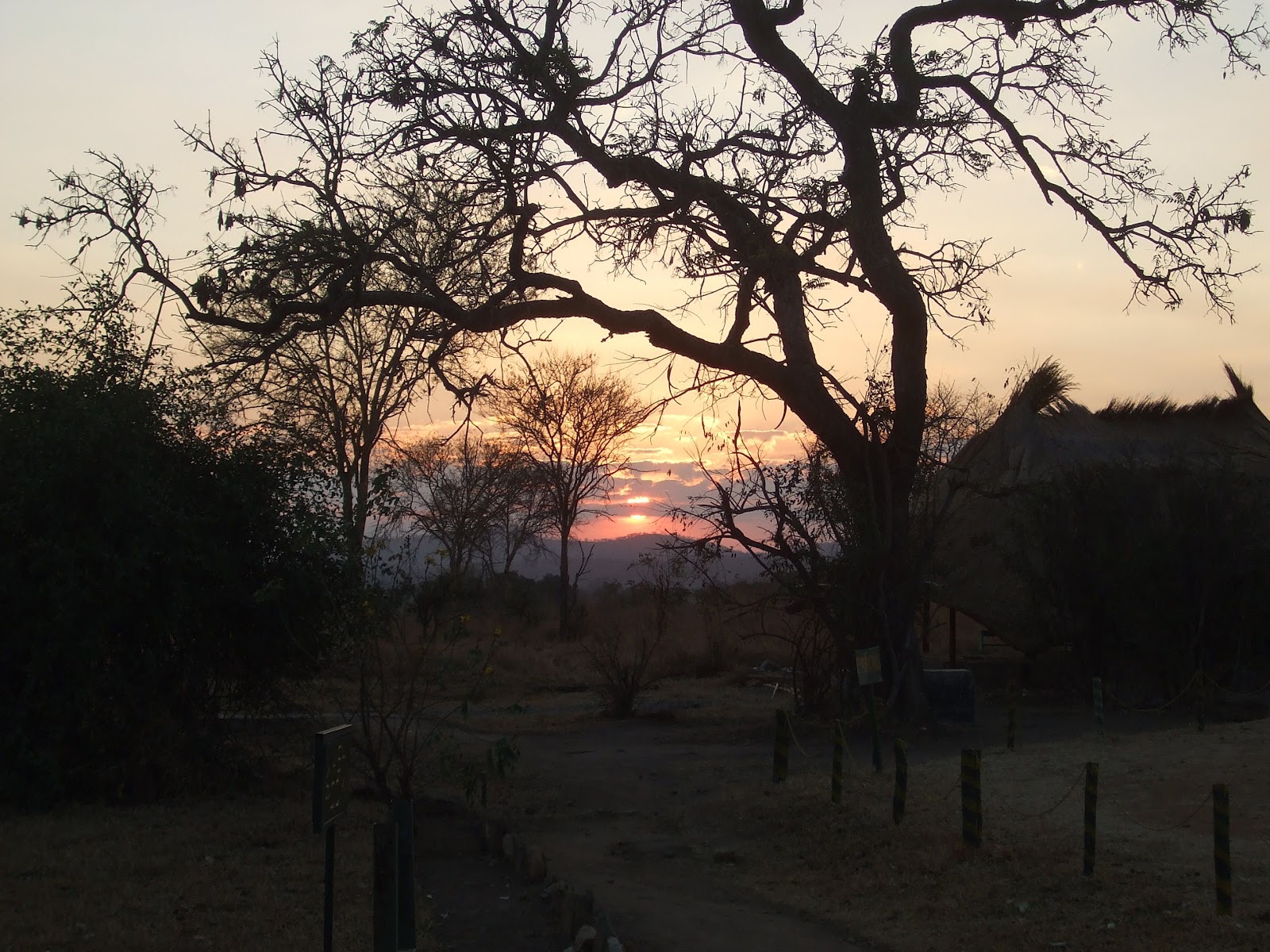
Monday, October 15, 2012

Lists about Tanzania


I thought I'd make some lists of things that aren't so convenient here, and things I like that I think I will miss about Tanzania. 

Difficulties, things I deal with that make me miss home:

1. Washing clothes by hand, hanging to dry, which really sucks in humid weather in Amani!  To be honest though, I have started enjoying the washing part, and if there's good sun I love the smell of my clothes after.  

2. To get hot water, have to flip a switch for at least 30 minutes to warm it up, and some places there was no hot water (which was okay in the hot places, but not in Amani--luckily I have enough here)

3. Buying water in bottles, too risky from tap, much less from streams (miss that about Norway)

4. Not having whole grains!!  In bread, rice, etc.  So sick of white bread.

5. Being a "mzungu" or white foreigner: people staring, shouting random English phrases (kids AND adults)


Nice things, things I will miss here:

1. Great fruit: papaya, mangoes, avocado, coconuts (fresh and mature),

2. Riding a motorcycle on nice roads in Morogoro, and being able to find a motorcycle taxi just about everywhere.  And costs 75 cents  to a dollar to go almost all the places I needed to go.

3. Aerobics class in Morogoro

4. Hot milk in my coffee and tea, and by itself, which I will have to replicate in Norway/MN

5. Monkeys, birds, forest night sounds in Amani

6. Warm weather, beautiful scenery/views

7. Wearing African-style and colorful clothes, and jewelry, some of which I could pull off in Minnesota, but much I would just feel silly (and cold in the winter!) in.  


Wow, I guess I have more good things than I thought.  Oh, and for difficulties, I did the small things--missing friends and family is the worst and goes without saying.  And then I could add in the good list "meeting new people" but that has been really good and really bad both.  


And now a funny story about one of the German colonists in this area I heard from an 88-year old Tanzanian man:

The German man (some kind of governor?) being carried on a palanquin of sorts by locals--this Tanzanian man was young when this happened, and said in concern: "That poor mzungu is sick and too weak to walk on his own!"

I asked if he was also being fanned by banana leaves.  Not this time, but I'm sure it has happened.  This story seems crazy to me that it actually happened, and I met a guy who witnessed it first hand, but in other, more subtle ways, I think colonialism if far from over in Africa.

Finally, here are some pictures I wanted to add last time but they didn't upload:


Tea fields.  Tea fields forever.


Forest in the background of tea fields and one of the nicer roads we drive on.


Hornbills hanging out overlooking secondary growth forest.  Taken from the tallest point in Amani Nature Reserve.

Wednesday, October 10, 2012

In Amani Nature Reserve, Tanzania

I've started my field work now, where I will be spending two and a half months in the Amani Nature Reserve, going to the surrounding villages to interview farmers about losing some (in some cases all) of their farmland to a new wildlife corridor that links two separate parts of the reserve.  I'm also interested in getting more information on the ecological restoration plan of the corridor, and try to interview all actors in the process, including government officials, NGO staff, and biologists who were involved in the process.  I think I won't give out many details other than that until I'm finished with my research, other than funny day to day happenings.

                           
In order to get to each village, from the Conservation Center where I'm staying, my translator who also moonlights as a motorcycle taxi, is also my driver.  We ride a motorcycle over some of the most awful roads I've seen, and they get much worse in the rain.  We've already used 3 different motorcycles (they aren't broken but we tried them until the third was the best) and we have to fix the current one semi-frequently, particularly the chain gets loose.  The first village interviews are done, and I have 5 villages to do.  The first one was the furthest away so thankfully we won't spend so much time on the motorcycle anymore.  I still get kinda muddy though.

                               
The forest here is beautiful, and I even enjoy the farms, where they grow all the famous tropical foods and spices everyone loves, plus some more we don't get in the North, like jackfruit.  They grow bananas, mangoes, coconuts, avocadoes, yams, papaya, cardamom, cloves, cinnamon, black pepper, and other staple crops like maize, beans and cassava.  It's really cool to see all these in plant and tree form.  Cardamom is a tall plant, while cinnamon and cloves are trees, and black pepper is a vine.  I love banana trees the best--they're so tall and the leaves so big and shiny green.  


Cardamom plants in front, banana trees on the side and in back.

For wildlife, my translator is also a guide for the Amani Nature Reserve, and he knows many plants, birds and other animals around.  I've seen hornbills, who look like toucans I guess, at least the cartoon Toucan Sam of Fruitloops, and they whoosh overhead with the weight of a hawk.  Then there's the small blue monkeys who travel in small groups, and slightly larger colbus or black-and-white monkeys.  I have many far-away pictures of blue monkeys, and one of this sweet horned chameleon (below monkeys) that a villager showed me.  


I think this might be the leader of the group.


Maybe the leader, not sure, or the group's yoga instructor.


Thanks, random villager, for the great find!

                               
The hardest part about being here is being alone a lot, especially after being part of a big group for two months.  Takes some getting used to.  I try to joke around with my translator, with some success, but the language barrier makes it difficult.  And cultural.  Today we were waiting for someone to guide us to the wildlife corridor, and my translator sounded frustrated that he didn't show.  I said, well, maybe he had an emergency, like his clove trees were on fire.  For some reason I made myself laugh pretty hard at this, because it sounded so crazy, like "sorry man, I gotta go--my clove trees are on fire!"  And my translator laughed but I think it was maybe not as unlikely a scenario as I had originally thought, as later on we saw some banana trees that had clearly been on fire that day or the day before.  I hope that if I do say something stupid or offensive he will tell me, but people here are so nice I'm not sure.

Thursday, September 27, 2012

Pig Roast and Goodbye


We had an event that I think I will never forget, because there were so many great things that happened.  One of our fellow students gifted us with his great cooking skills and slow-roasted a 10-kilogram pig (I weigh about 60 kilos, for scale) for 6 hours, periodically seasoning and spraying beers on it.  It tasted amazing.  The whole night was amazing.  


I used some of the coals to make a potato, carrot, onion, garlic, rosemary and olive oil side dish wrapped in foil.  And we made a salad of other vegetables we got at the market.  

We saw a chameleon in the bushes near where we had the fire, standing absolutely still.  Late in the night we saw it again and it was still white, the same color as a plastic bag nearby.  Adaptation?


I kept thinking, as we sat around the fire after eating, this is one of those timeless activities that human groups have done since humans existed.  This is it.


Five people representing five countries.  Sometimes I think if we set our minds to it and didn't have so many pig roasts, we could save the world.


Enjoying a "Safari" in front of the fire.

Our awesome chef.


Cutting the roast.  We shared some with the owners of the outdoor bar and grill, for being so cool and letting us roast the pig there.


After dinner conversation.  The guy second from the left was our guide up the mountain two times, once halfway and the second time all the way 2090-some meters to the top of a mountain nature preserve.  There were monkeys!  But I only saw them from far away.  He brought his friend to our feast--I'm so happy we invited them.


At the end of the night, we all ended up spontaneously dancing to some great music, in a big circle with all of us plus people who worked at the outdoor bar.  It was such a fantastic night.

Now, the group trip has ended, and many of us have gone off to do our individual field work, after a short respite on a really nice beach close to Dar Es Salaam. It was hard to say goodbye to everyone, but I'll look forward to seeing most of them in Norway.  We'll have to get together and fight international injustices and save the planet!  But first we will have another pig roast, I think.  It takes energy to save the world!

Now I'm staying in the Forestry department's guest house here in Morogoro, and I will get up early tomorrow to go to the Amani Nature Reserve, where I will do my field work.  I've had a great introduction to Tanzania, and I only hope I can work hard enough to make up for how fortunate I've been to come here and be shown around by such friendly and giving people.  


Tuesday, August 28, 2012

Mikumi Park

It's been hard to keep this up since we've been moving around so much.  We have as our base of operations a hotel in Morogoro called the White House, from which we travel to different villages and parks for "field visits" and stay between 1 and 3 nights at a time.  The longest we've had was near Mikumi National Park, which feels like it was so long ago but was only 2 or 3 weeks ago.

The park is big but not the biggest national park in Tanzania.  "Size: 3,230 sq km (1,250 sq miles), the fourth-largest park in Tanzania, and part of a much larger ecosystem centered on the uniquely vast Selous Game Reserve." --from the official website of Tanzania's National Parks.  We saw all the famous wild animals, and not-so-famous, except for lions.  We all really wanted to see lions, and got up early to see them, but they eluded us.  We joked that they probably weren't even in the park, but the guides always told tourists at certain points "Oh, we saw five lions here yesterday."  How would we know?


Sunrise at Mikumi before our safari tour.


And here's some of my best pictures from the drive through of the park


Giraffe


Yellow baboon.  They were all over, on the roads, and came close to us maybe expecting food.


Impala


Zebra


Got a close up of an elephant!


Elephant family


Crocodile hanging out in the hippo pond.  I'm sure he thought it was the croc pond.


It was hard to get a good one of the hippos above the water.  It was midday and they just stay submerged until nightfall, when they roam and graze.  They say hippos cause the most deaths of any of the wild animals.  They don't even eat meat--just kill you and leave.  I was glad to not be camping, as some people do.

We visited two villages around the park and asked them how they felt about the park, and were they compensated for crop losses from elephants and the like.  They said at first they liked the park, but the elephants weren't scared of them any more and they wanted to be allowed to kill one so the elephants would be more afraid of them.  They said they hadn't killed any, but the Tanzanian student in our group asked them what was the best part of en elephant to eat, one of the elders said the neck meat, making all the villagers laugh, and us once it was translated.  I guess you just need to ask the right questions!

Since Mikumi we've had many other field visits, and some classes at the Sokoine University of Agriculture, which has a close relationship with our University.  The classes lately have been mind-numbing due to thick accents and poorly put-together and often repetitive lectures.  We're all pretty tired  and have had some strained relations within the group but I think we all cope by sticking with the people we like and switching groups when it feels right.  At least that's been my strategy.

I'm getting used to how they do things here now, but it wasn't an easy adjustment.  Everything moves slower, and sometimes it seems like people really try to be as inefficient as possible.  I feel also slower, like it's harder to move at the rapid pace I like to walk when I'm in Norway and the US, partly because of the heat and partly because you really have to watch your step on the uneven paths and such.  Today I took a group through the market, since I had a really nice introduction to it by our Kenyan student the day before, and now everyone wants to know where we bought the chapati's so I've taken people there 3 times already.  People bargain here more, and I'm not good at it, and part of me doesn't like it anyway because people here make between 10 and 20 dollars per month on average, and really a giant avocado for 75 cents is a great deal.  Do I really need to have it for 50 or 25 cents?  Some people in our group won't pay for anything without bargaining, but the Norwegians don't really bargain and I don't usually, but I have a little, and go some sandals for 18 instead of 19 dollars...I think the guy knew I wanted them.


Tuesday, August 14, 2012

Tanzania

I'm in Tanzania!  As part of my Master's degree in International Environmental Studies, we have to do a field course in either India or Tanzania, 70 percent covered by our department.  The Norwegian nationals get it 100 percent covered, but who's counting...

Tanzania is a beautiful country with very friendly people, but like many African countries it is very poor.  The currency is the Tanzanian shilling, and the rate is about 1557 TZS to US $1.00.  I pay for my dinner usually with a 10,000 TZS bill, if I have some beer or wine with the meal.  We started in Dar es Salaam, where we learned about the history of the country and about the first president after independence, Julius Nyerere, whose photo is hanging in many places.  From outside our hotel:


Our group is very international, living up to the name.  We come from 12 different countries and 5 continents.  I'm the only U.S. citizen, with others form Iran, Japan, Norway (of course), Slovakia, Columbia, Canada, Greece, Lithuania, Uganda, Kenya and one Tanzanian.  We spend some days at the Sokoine University of Agriculture, and go on field visits to learn about Tanzanian politics, economics in terms of the environment and development.  Last week we went to Mikumi National Park and saw lots of wildlife, and visited the villages around the park to talk to the people there about living close to the park.  One was very poor and was waiting on compensations from the park, and the other was more well off but was still having problems with elephants coming out of the park eating their crops.

Here is me for scale by some sugar cane:


And rice fields and farmers on another field visit:


On days off I was able to go with a group to a nice little island, and another day we went on a long hike  up a mountain to see the views, a run-down German colonial building, and some villages where we bought fruit straight from the farmers.  So far it has been an amazing trip, and I still have months to go.


Island off the coast of Dar Es Salaam:


From the mountain hike:


and:


and the German colonial building:


banana flowers turning into fruit on the way up:


In Morogoro, an awesome picture of Obama painted on the side of a barber shop:


I'll post my pictures of wildlife next time, hopefully, but I don't have one of those high-zoom cameras for that, so they're not great.  Until then!

Sunday, July 22, 2012

One year after 22 July, and quick update

I feel a bit removed from the bombing and then shooting that happened one year ago today in Oslo and the island of Utøya.  When it happened I was working in Wisconsin still, and had just revealed my plans to go to graduate school in Norway (I had put in my 2 week notice) and I watched the people of Norway meet the tragic events with love, rather than hate.  The pictures of the flood of flowers in the city, and what I saw in person a few weeks later, are what I remember most.  Today on TV there are many speeches, singing, and footage from that day a year ago.

I've watched some of the trial of Anders Behring Breivik, the shooter, over the past months.  He is an absolute monster.  He's always smiling a bit, completely at peace with his actions.  In his speech he gave in court he defended his actions and implored the court to release him so he could continue his "mission".  He said he was defending his cultural identity from the influx of many cultures to Norway.  They answered him with a beautiful song celebrating many cultures.  Here is my post that includes photos of the aftermath of the bomb in Oslo.


I was busy in June with a Swahili course followed by a wonderful trip to Spain:


With good food,


Cool sites,


And great friends.  It was only five days but I know I want to visit again as soon as I can!  


When I returned to UMB, I had two days to move out and move in to my dear cousin Unni Beate's place, for the month of July before I go to Tanzania.  My mom came from June 30 to July 16, and we saw the Oslo sites and my school before taking the train to the West coast of Norway, the Sogn fjord area, the town of Aurland.  We spent 4 days with our dear friends Unni Beth and her husband Kjell in their cute house with the spectacular view of the Aurland fjord.  They took us up higher to get some great pictures of Aurland town, the fjord and some crazy tourists.


Aurland from above.


View of the Aurlandsfjord that connects to the main fjord, the Sogn fjord.


Oh, those crazy tourists.  Taking pictures of themselves in front of stuff.


Next to mailboxes...this is from one of the farms that our ancestors came from.  My mom's last name is spelled "Dalbotten" but it is descended from the same name.  I spent a lot of time trying to decipher books in "nynorsk", the other writing system in Norway (there's two!) about the lines of families that have lived and worked on the farms we visited.  I'd like to try the same thing with my mom's mom's line, and my dad's ancestors, someday.

I also found time to take a dip in the fjord, and did I ever regret it instantly:


But at least I have proof that I did it!  It was just over 50ºF, 11ºC.  I needed a sauna to run into afterwards!

This last week in Norway I have a lot to do to prepare for Tanzania, as my flight is on the 29th.  I don't know if I will have time or be able to update here for the next four to five months, but I guess I will find out.  I'm planning to be home for Christmas and some or most of January, so I'm looking forward to seeing many friends and family then!

Saturday, June 9, 2012

17th of May and Norwegian Summer


Everything has been pretty busy during final exams from the middle to the end of May, but I was able to have a wonderful time in Oslo with my cousin Unni for the Norwegian Independence Day on the 17th of May.  I of course forgot my camera, but the crowds look like this:


This is around the palace, where the parades of school children end up to wave at the King, Queens, Crown Prince and Princess, etc., who stand between the pillers up there.  I saw them through a mass of people on the lawn.  After the parade we had a nice late lunch with many of the traditional foods people eat on the 17th of May, like salmon and scrambled eggs.  Actually I don't know how traditional that is, but it tastes great!

A bit about the history of the 17 of May: Norway was under Denmark's rule from the 1300s until 1814 when the Norwegian constitution was written, and they became "independent" but they were tied to Sweden for almost 100 years after that.  I always get confused about this, but according to wikipedia: "In 1814, Norwegians resisted the cession of their country to Sweden and adopted a new constitutionSweden then invaded Norway but agreed to let Norway keep its constitution in return for accepting the union under a Swedish kingRising nationalism throughout the 19th century led to a 1905 referendum granting Norway independence."  


So maybe this explains the high level of national pride here.  I joined in and thoroughly enjoyed waving my little flag around all day.  


It was very summery during the end of May too, but now it's cooled off again and I'm wishing for those hot days back.  I don't know if it will get "hot" here again.  Interestingly, there is no separate word for hot--they say "varm" for both warm and hot.  And the clothes come off starting at 50 degrees F (10 C). It's understandable considering the long winter they have.  


Last weekend was a big music festival all day in Oslo, and I went with some friends to the farmer's market and ate a deer meat burger with beer.  It was one of the best tasting burgers I've ever had, no exaggeration:


We listened to alternative rock on the stage and had a BBQ where I ate even more delicious food and drank more beer, and eventually we went to another stage closer to the main train station.  There they played Latin music, and we danced to a lot of it.  It was almost 11 PM (and still light out, it is always a bit light out now) and we heard sirens.  The music stopped and I turned around and there was an apartment building with its roof on fire.  Here's a link to the story--I couldn't find it in English: Aftenposten.  No one was hurt or killed, but they don't know the cause and are still working on fixing it  so that there's no risk of falling debris.  It was a pretty crazy end to a really fun day.  I'm really glad no one was hurt.  A lot of people were blocking traffic gawking and taking video of it though, which I guess is to be expected.


We have a really nice pond on campus, aptly named the "duck pond", with a little gnome hut in the middle that gets repainted every so often.  Most of the time it is red and white striped, after the colors of the main fraternity on campus called the "Hankatter" or "Tom Cats".  And the main sorority is called the "Hunkatter"--did you know the term for a female cat is a Queen?  So, the "Queen Cats."  Anyway, the Tom Cats think they own that little house but other groups challenge their dominance often by repainting the house.  I don't really get it, but it reminds me of the story of the eagle statues at Hamline, which was before my time there.


There's ducklings in the duck pond now, and it's so cute to watch them waddle over lily pads since they're so light.


Yesterday I went to Oslo to see some friends and eat dinner together, but before I met up with them I took a walk in one of the oldest parks in Oslo I'd been meaning to visit.  I was confronted immediately with this Canadian goose look-alike:


called a barnacle goose.  This is the first time I've seen them, so I don't think they are as numerous as the Canadian geese.  This group seemed to have the same habits as the other.


Next I went to see the ruins of on of the oldest churches, called the Maria Church.  It was originally built in 1000, expanded in 1300, and was falling apart by mid-1500.  It was a stave church, with the really tall tower, or stave.


I tried to take a picture of the new Oslo rising out of the ruins:


I don't know what it is about city parks, that they are free or what, but they always seem to be trashy and marked up by graffiti, and you can see next to the sign about the church.  And even in really nice nature areas I've seen a lot of trash, especially these one-time use grills, also found on the ruins:


No matter where you go there's always trashy people.  There's a trash can not 10 meters from this spot.  If wishes were fishes...we'd never run out of cod.

I'm taking a Swahili course now, to confuse myself and because I'm going to Tanzania for my Master's thesis fieldwork.  The first two months there I will be part of a course at a sister University to my own, and then the next 2.5 to 3 months I will be interviewing people about a new addition to a nature reserve called Amani Nature Reserve.  I have a lot to do until then but I will try to update more details about it before I leave.  For now, here's a map of Tanzania--I will be in Morogoro the first part (west of Dar es Salaam) and then Amani is near Tanga, to the north of Dar es Salaam.